Anti-Trauma Flooring: Safety and Sustainability for Play and Sports

Recycled Rubber Playground Safety Surfacing for Play and Sports

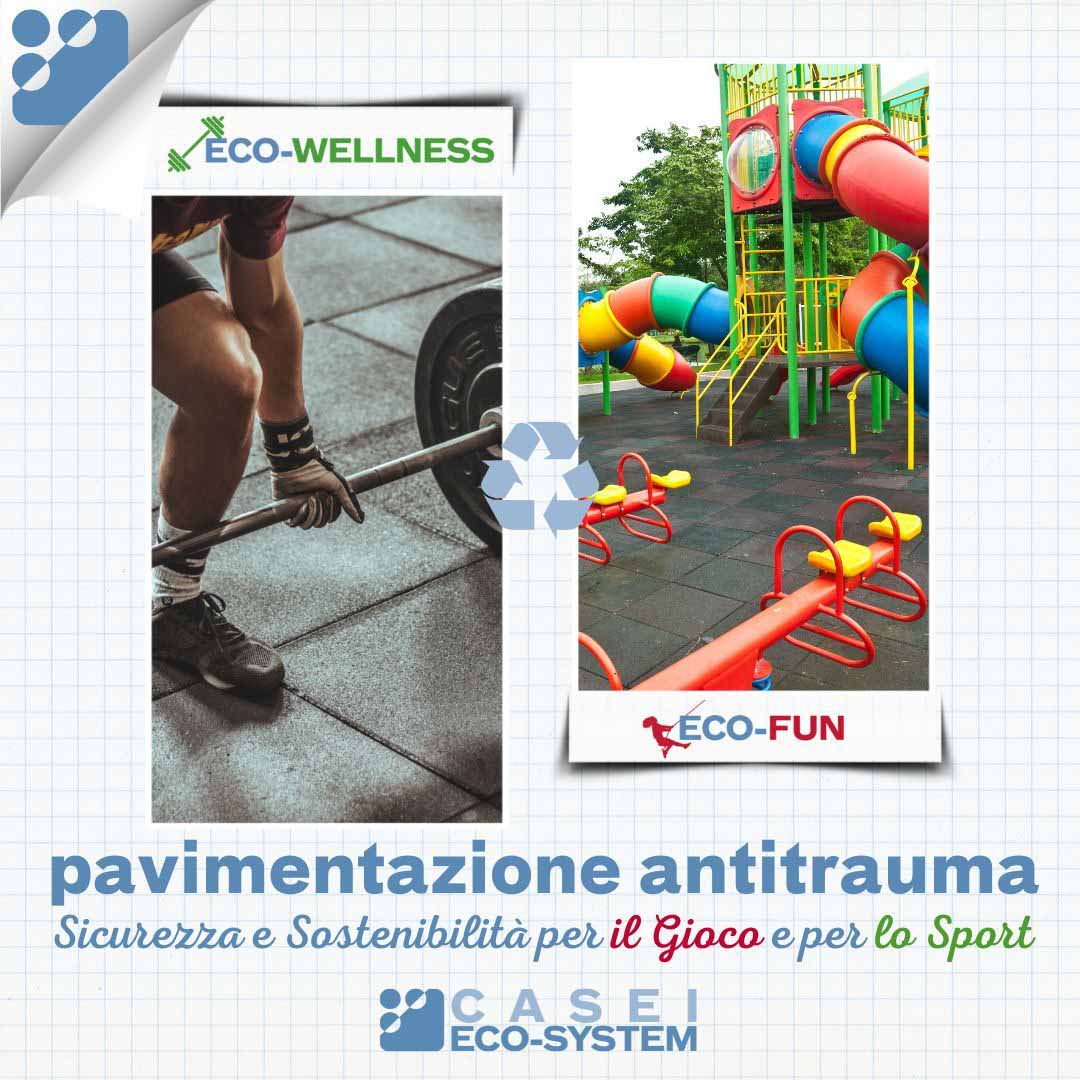
Playground safety surfacing has become an important feature in settings such as playgrounds, fitness areas, and wellness spaces. In addition to providing protection and comfort, it can promote material recovery through the use of significant percentages of recycled rubber from end-of-life tires.

The slabs or tiles that typically make up this type of flooring are manufactured using rubber granules mixed with resins and other binders.

Benefits of playground safety surfacing

Choosing playground safety surfacing offers advantages both in terms of safety and the use of recycled materials. Its shock-absorbing properties help reduce the impact of collisions during recreational and sports activities and provide a comfortable surface, which should be selected based on its intended use and specific requirements.

Safety and Security

The main feature of playground safety surfacing is its ability to absorb impact: a key consideration both in sports facilities, where repeated stress is common, and in playgrounds, where accidental falls may occur.

The grip provided by recycled rubber flooring is also a factor to consider. The particle size and surface finish, in fact, affect the texture, ease of cleaning, and appearance of the product. The ECO-GYM and ECO-GYM TOP lines are examples of this: the former is made with medium-sized granules and has a rougher surface; the latter, produced with fine-grained powder, features a smoother surface that is easier to clean.

Environmental Sustainability

The use of recycled rubber contributes to the recovery of granules obtained from end-of-life tires and their transformation into new, durable products. This approach helps keep materials in the production cycle and supports the principles of the circular economy.

Applications of playground safety surfacing

Playground safety surfacing can be used in playgrounds, gyms, outdoor fitness areas, and wellness spaces. The various options for thickness, shape, size, and finish allow it to be adapted to the needs of each specific setting, subject to verification of the applicable technical and regulatory requirements.

Playgrounds

In playgrounds, playground safety surfacing helps create a safer and more comfortable surface for children. In this context, it must meet specific requirements: its thickness and performance must be consistent with the fall height of the equipment and with the regulations applicable to the project.

Fitness and Wellness Areas

In fitness and wellness areas, playground safety surfacing absorbs some of the impact generated by exercise and the movement of equipment, including barbells. The available solutions can be used both outdoors and indoors; the product and configuration should be chosen based on the sport and the conditions of use.

Alternative formats: hexagonal plates and rolls

In addition to traditional square or rectangular tiles, you can consider different sizes. ECO-GYM TOP ESA, for example, is a hexagonal tile that covers 1.15 square meters and allows for a honeycomb-patterned installation.

ECO-GYM ROLL, on the other hand, is a roll-form flooring with a standard height of 1.25 meters and lengths ranging from 6 to 10 linear meters, depending on the thickness. This format reduces the number of seams and can speed up installation, even in temporary applications.

A customizable solution for gaming and sports

Playground safety surfacing made from recycled rubber can meet safety, comfort, and material recovery requirements in a wide range of applications. The shape, thickness, dimensions, and particle size must be selected based on the intended use, the required performance, and the product’s technical specifications.
Medium Granule or Dusty? Let’s find out the differences to make the best choice!

1707998499082

When choosing a rubber playground safety tile, the particle size of the material is an important factor. Medium-grade SBR rubber granules and SBR rubber powder are used to create flooring for gyms, fitness areas, and playgrounds, but they produce surfaces with different textures, appearances, and characteristics.

Understanding these differences helps identify the solution best suited to the project’s needs, environmental conditions, and intended use.

What Is the Average Granule?

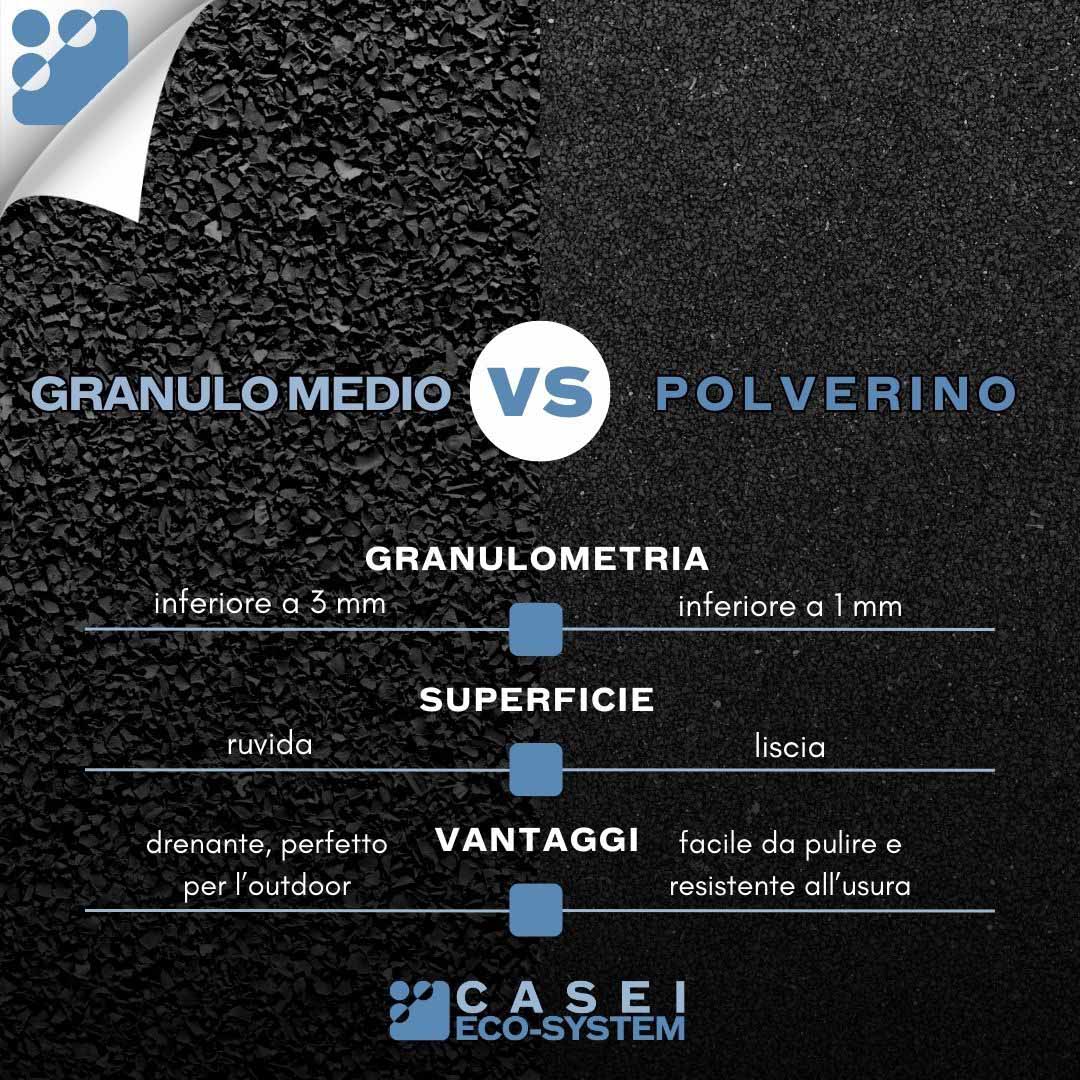
The medium-sized granules consist of recycled rubber granules derived from end-of-life tires, generally measuring less than 3 millimeters. Their more open structure promotes drainage and makes this particle size suitable for outdoor use as well.

The surface is rougher and provides good traction; however, this very characteristic may require extra care during cleaning.

What Is “Polverino”?

The powder is a fine fraction of SBR rubber, generally less than 1 millimeter in size. It gives the tile a more compact, uniform surface with a velvety appearance.

It is often used in indoor applications, where its smoother finish and easier maintenance are appreciated. However, its overall performance—including wear resistance—depends on the product’s complete formulation, density, and construction.

The Main Differences

  • Particle size: The average granule contains larger particles; the powder consists of a finer fraction.
  • Surface: Medium-grit sandpaper creates a rougher, more open finish; fine-grit sandpaper creates a more compact, smoother surface.
  • Drainage: The structure of the medium-sized granules can promote water drainage in configurations designed for this purpose.
  • Cleaning: A surface made with powder is generally easier to clean because it is less rough.
  • Uses: The medium-grain finish is also frequently used outdoors; the fine-grain finish is often chosen for indoor spaces and a more uniform finish.

Same material, different results

Medium-sized granules and fine powder are derived from the same base material and can be used in the same production process. It is the different particle sizes, along with the other components and production parameters, that determine the characteristics of the finished flooring.

How to Choose the Particle Size

There is no single “best” version. The choice depends on whether the installation is indoors or outdoors, the cleaning methods, the required drainage level, the desired appearance, and the expected performance for the specific application.

The Casei Eco-System team can assist designers and contractors in evaluating the most suitable product by providing technical information tailored to the project’s needs.

ECO-GYM ESA the new hexagonal tile for gyms

ECO-GYM ESA hexagonal rubber gym tile made from recycled rubber for gyms

ECO-GYM ESA is a hexagonal tile made of recycled rubber, designed for sports facility flooring. Its geometric shape allows for a distinctive installation pattern while maintaining the functional characteristics required for a gym floor.

Hexagonal rubber gym flooring

The hexagonal shape of ECO-GYM ESA offers an alternative to traditional square tiles and allows for a honeycomb-style layout. The result is a surface with a contemporary look, ideal for enhancing fitness areas and wellness spaces.

Recycled rubber from end-of-life tires

ECO-GYM ESA tiles are made from recycled rubber derived from end-of-life tires. The material is transformed into a new product designed for sports flooring, contributing to material recovery and the principles of the circular economy.

Medium or ultrafine granules

ECO-GYM ESA is available in classic black and can be manufactured with medium- or ultrafine-grain material. The different grain sizes affect the surface finish, appearance, and cleaning methods; therefore, the configuration should be chosen based on the environment and intended use.

Available Thicknesses

The tiles are available in thicknesses of 15 and 20 mm. When selecting the thickness, consider the installation area, the equipment present, and the expected loads, referring to the product’s technical documentation.

Installation and Shaping

Installation follows criteria similar to those for traditional square tiles. The cutting guides integrated into the tile make it easier to identify the reference points for cutting, helping to simplify the installation process along edges and perimeters.

A Unique Solution for Sports Facilities

ECO-GYM ESA combines recycled rubber with an original geometric design. Particle size and thickness can be selected based on the project’s requirements, while the hexagonal pattern allows the gym flooring to stand out visually.

FIERA LIBERAMENTE: There will be a track and field track

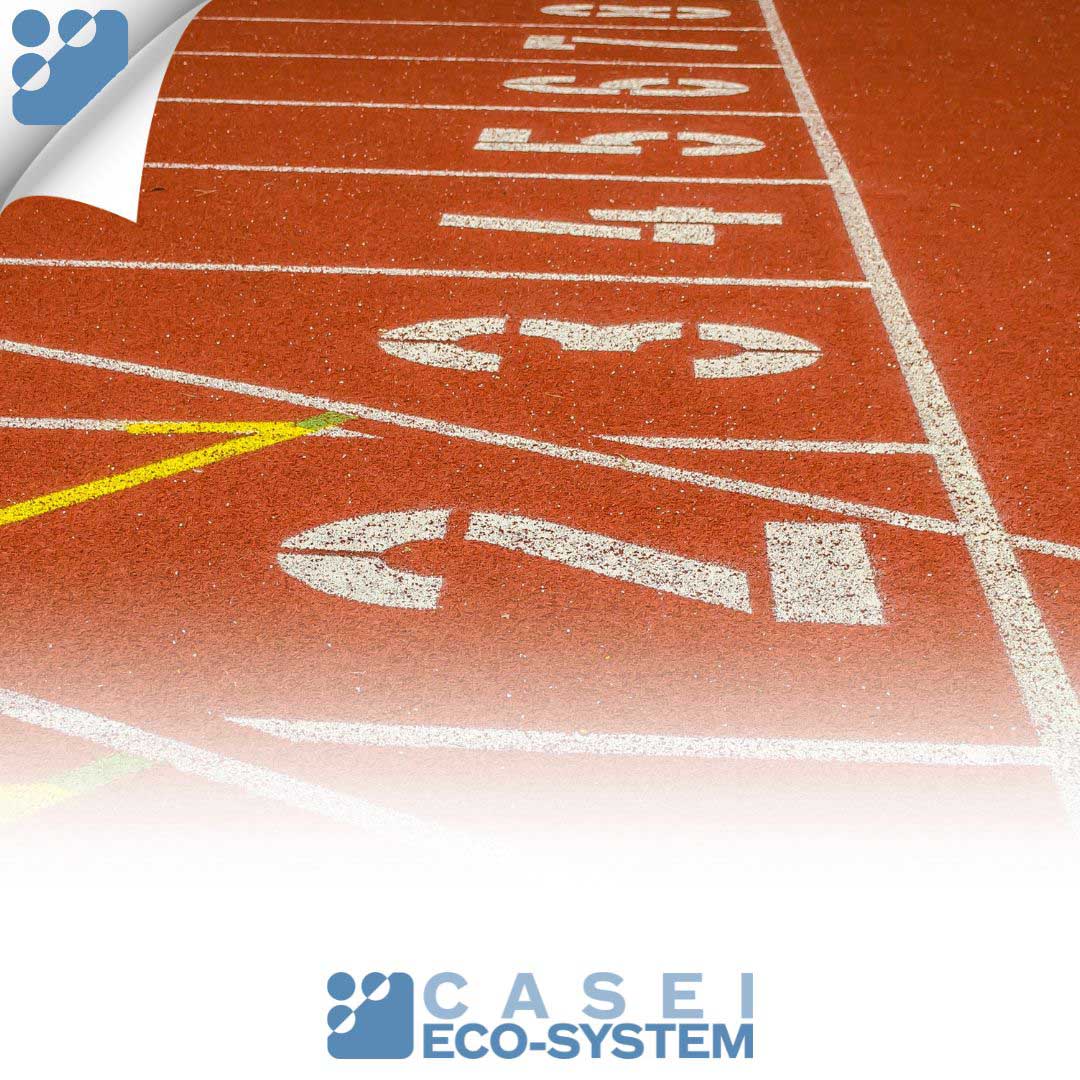
Track and field track built with ECO-SPORT ROLL at the Liberamente 2024 trade show

From February 23 to 25, 2024, BolognaFiere hosted the 18th edition of Liberamente, the trade show dedicated to leisure, entertainment, sports, and the outdoors. Over the course of the three days, visitors had the opportunity to learn about and try out numerous sports and recreational activities.

An athletic track at the Liberamente fair

For the event, Casei Eco-System collaborated with Conica and FIDAL to build an athletic track, contributing to the project through the use of ECO-SPORT ROLL.

The Contribution of ECO-SPORT ROLL

ECO-SPORT ROLL is a product designed for indoor and outdoor sports applications. In the system presented at the trade show, it was used in conjunction with resins supplied by Conica to create a continuous, seamless surface for the demonstration track.

The combination of these components has resulted in a surface that is soft yet durable, smooth, slip-resistant, and easy to clean. Performance and installation procedures must be evaluated with reference to the complete system configuration and the relevant technical documentation.

Sports and Outreach in Partnership with FIDAL

The track gave FIDAL the opportunity to introduce visitors to the world of track and field through activities and experiences held right at the event venue.

Technical collaboration for the event

Participation in the Liberamente 2024 trade show brought together the expertise of Casei Eco-System, Conica, and FIDAL in a project dedicated to sports. ECO-SPORT ROLL provided the rubber subbase for the track built for the event.