
we wanted to talk to you about
Outdoor rubber, including practical choices, installation and maintenance.
When we think of covering terraces or gardens, wood, stone or stoneware often come to mind. But in recent years more and more people have discovered a viable alternative: outdoor rubber flooring.
These are practical, safe, and versatile surfaces that transform residential spaces into places to live in every day. Rubber provides a level of comfort underfoot that rigid materials lack; it reduces the risk of slipping, withstands sun, rain, and frost, and requires very little maintenance. Plus, it offers a sense of insulation by dampening our footsteps—a benefit no other alternative can provide.
In this guide we will look at why it pays to choose rubber, where best to use it, the most popular types, tips for installation and maintenance, with some practical tips on products developed by us.
Why choose rubber for outdoor flooring?
The reasons are concrete and everyday:
- Non-slip safety: the rubber maintains grip even when wet, limiting the risk of accidental falls.
- Comfort: more elastic than tile or concrete, walking on it is pleasant!
- Weather resistance: not afraid of frost.
- Natural drainage: many solutions are designed to facilitate water runoff.
- Quick installation: plates and rolls are installed without demolition or invasive work, even over existing pavement.
- Minimal maintenance: all it takes is water and a little elbow grease to keep it clean.
Tip: In multifunctional residential spaces such as courtyards or walkways, recycled rubber tiles such as ECO-PAV combine durability with ease of installation.
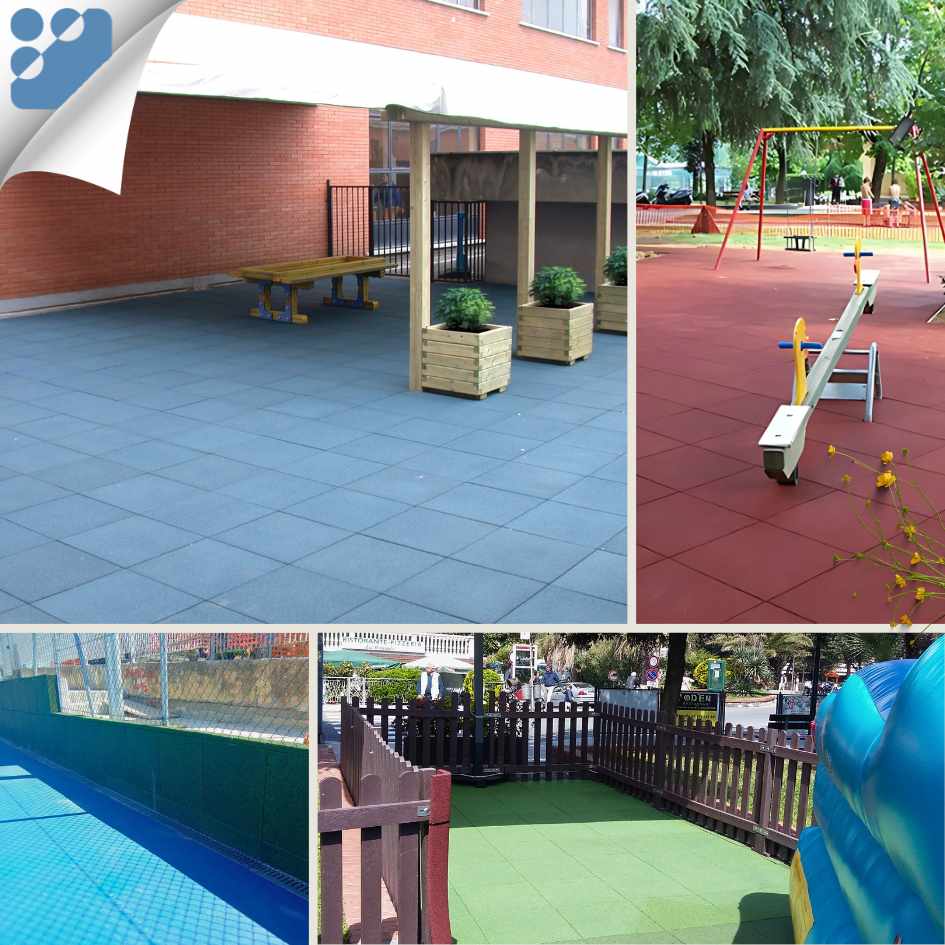
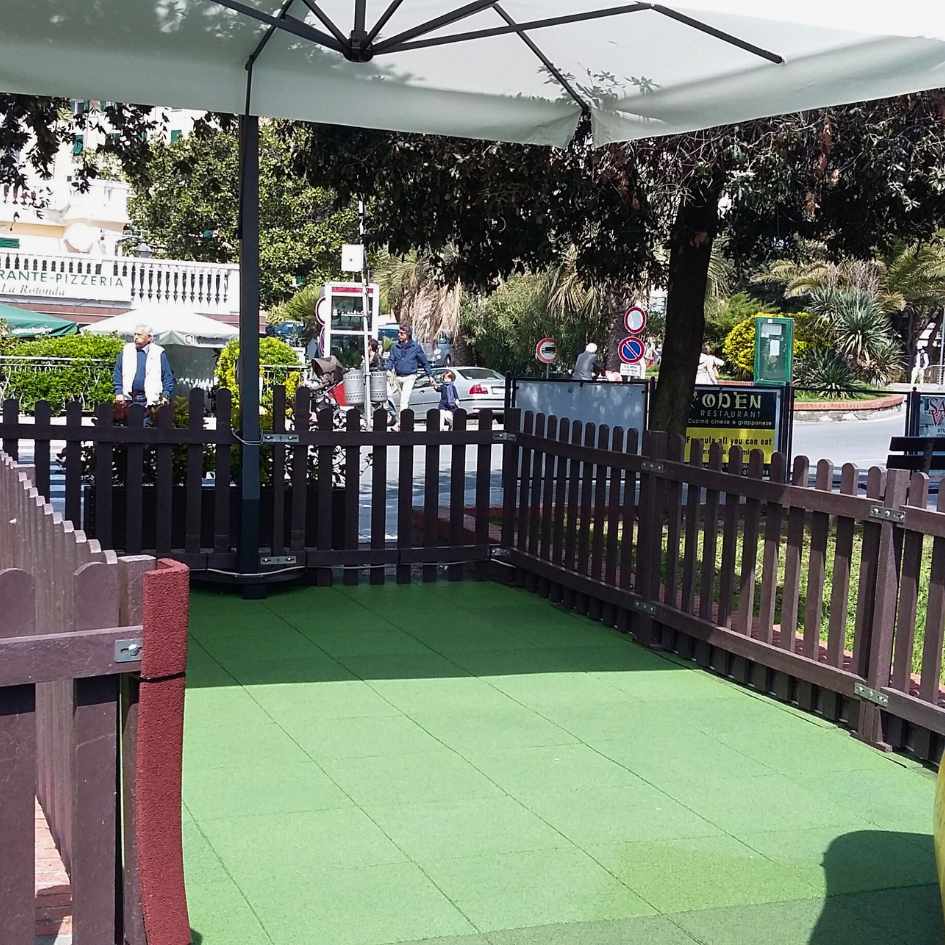
Condominium play area
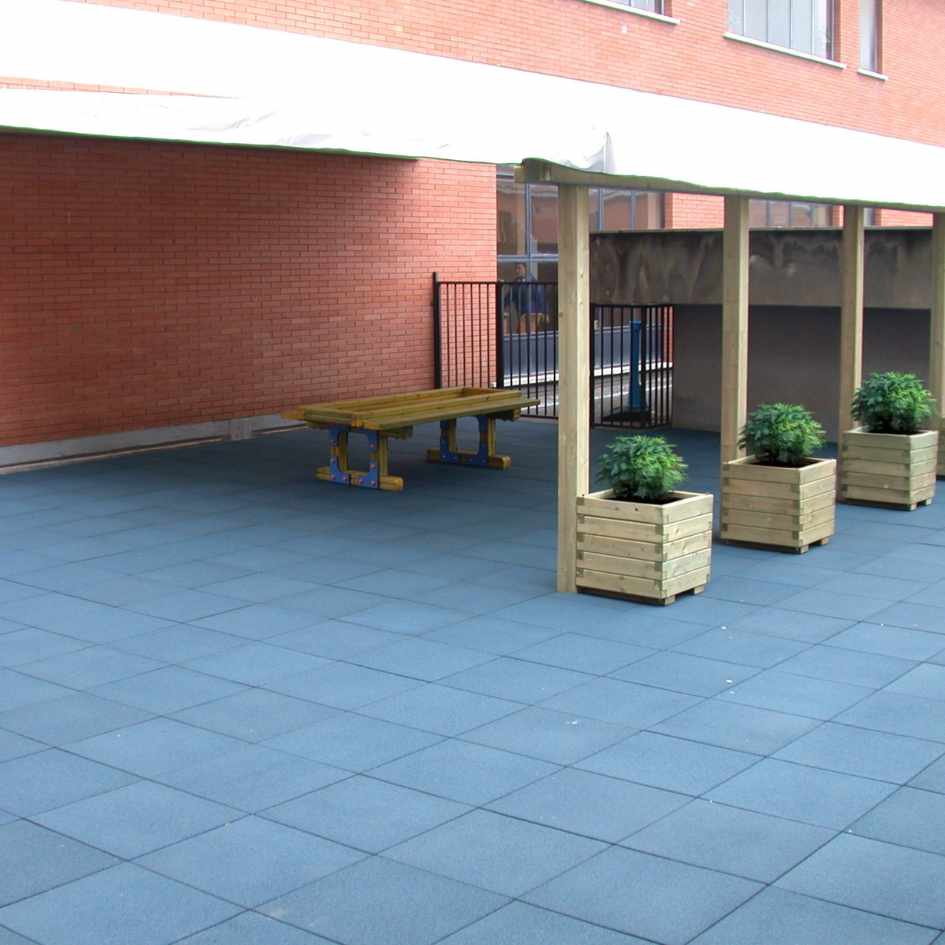
Balcony with drainage paving
Where to use rubber in residential spaces?
Terraces and balconies
Often underestimated, terraces and balconies become more inviting with a surface that reduces summer heat and improves insulation.
Example: drainage solutions such as ECO-ROOF prevent water from pooling and protect the underlying membrane.
Gardens and driveways
The main problem in gardens is mud after rain. With rubber, driveways remain workable and safe.
Example: the modules ECO-PAV allow paths to be paved in a stable manner.
Wellness areas
A healthy lifestyle and a focus on physical fitness require adequate space for your daily exercise routine.
Example: drainage mats such as ECO-GYM or ECO-GYM TOP are specifically designed for athletic use.
Domestic play areas
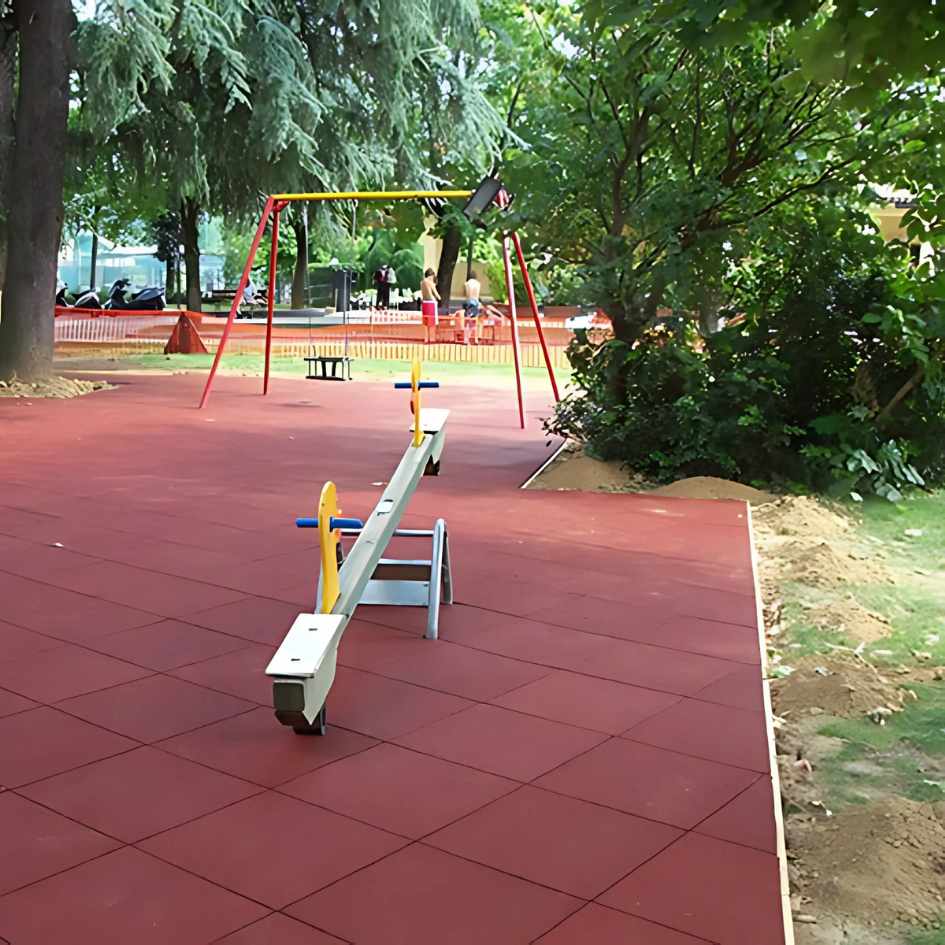
Children need safe and comfortable surfaces. The right flooring allows them to play safely.
Example: the tiles ECO-SOFT are designed for outdoor play spaces.
Home and garage gym
Many turn garages and porches into home gyms. Rubber protects the bottom and absorbs shock.
Example: the models ECO-GYM and ECO-GYM TOP are specifically for use with tools and weights; for large areas, the rolls ECO-GYM ROLL reduce joints.
How to install a rubber floor
A properly installed system will save you trouble for years to come. Before you begin, make sure the area is clear of obstacles and that the surface is even: 80% of the final result depends on proper preparation. Hiring a professional for a “workmanlike” installation is always the recommended solution! But if you want to do the job yourself, follow these steps:
Prepare the background
The substrate must be firm, level and clean. On concrete or tile remove dust, glue residue, paint or wax; on fresh screeds wait until completely dry. If working on soil or gravel, make a load-bearing, level layer first to prevent subsidence. A vacuuming/blowing pass before laying makes all the difference.
Check the slopes
Water should drain to grates and sumps without stagnation. Check the direction of the slope (even with a simple bucket of water) and do not obstruct drains: when cutting modules at grates, leave enough margin for disposal.
Choose the pose
- Dry (free standing) if the area is sheltered, normal passage or if you want to be able to reopen the surface in the future.
- With adhesive only in high traffic areas, ramps, windy areas or where perimeter fixings are needed. Apply the appropriate adhesive outdoors following the manufacturer’s specified open times.
Cut with precision
Use a cutter with a new blade and a metal ruler: better several light passes than one deep cut. Gradually approach walls, columns and drains to get clean, matching joints. On large thicknesses, it is preferable to use motorized cutting tools.
Trim the edges
Close the perimeter with profiles (such as ECO-BORDER): they reduce the risk of tripping, protect module edges, and give a more professional appearance.
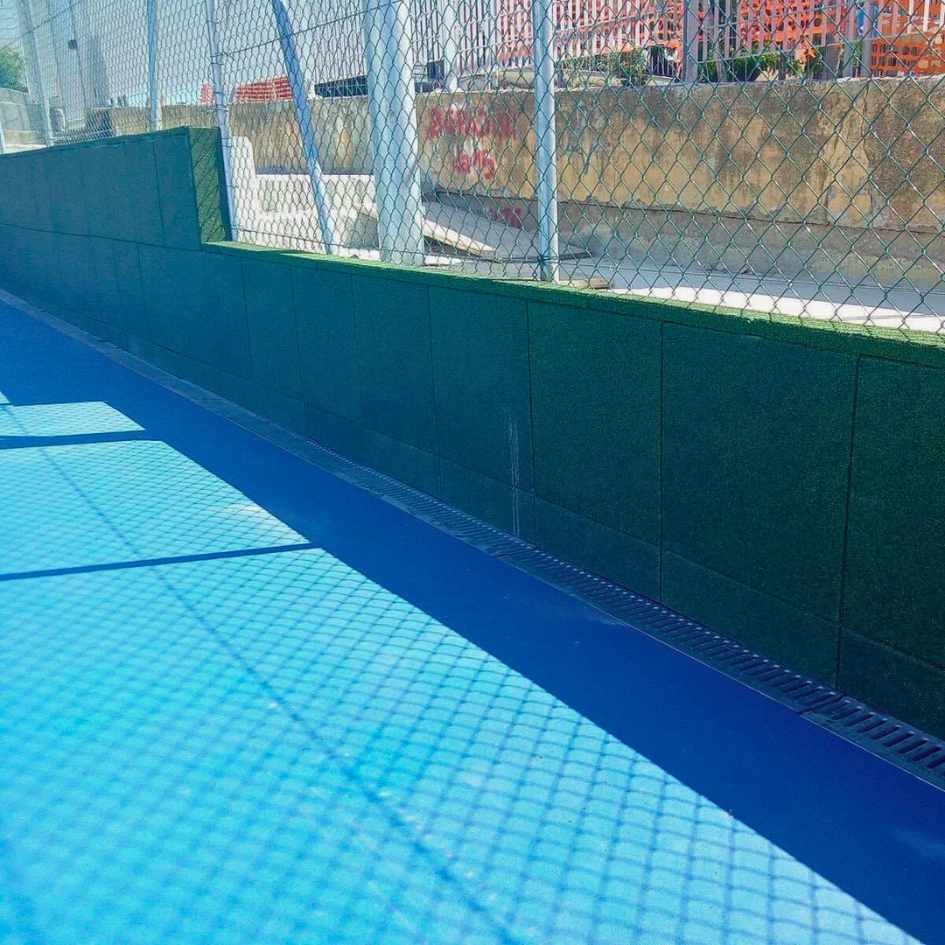
Sports field with protection
Private playground
Maintenance: quick and easy
Rubber requires little but constant attention. A light care plan maintains aesthetics and performance over time.
Routine cleaning
For everyday dirt, water and mild detergent will suffice. On “stubborn” dirt, use a soft-bristled brush. Avoid harsh solvents or bleach: they are not needed and may dull the surface.
Organic residues
Leaves, soil and pollen retain moisture and leave halos. Remove them regularly (blower or soft broom), especially after rains and in fall, to prevent green patina and stains.
Periodic inspection
Every season change, do an inspection tour: check joints, edging and transition points. If a plate is very worn or damaged, replace only that one: that’s the advantage of modular systems.
Pressure washer
You can use it, but at low pressure and keeping distance from the surface. Proceed with even passes, without lingering too long on the same spot so as not to lift the edges.
Frequently asked questions
Can it be installed over an existing floor?
Yes, as long as the subfloor is stable and level. ECO-ROOF, for example, can be easily installed even on tiled terraces.
Is rubber safe for children?
Yes: the tiles ECO-SOFT tiles were designed specifically to reduce risks in play areas.
Does it withstand frost and rain?
Yes: Recycled rubber flooring maintains its performance even in harsh and humid climates.
How long does an outdoor rubber floor last?
It is not possible to give a precise answer because there are many factors that affect its lifespan, but with regular maintenance, it can last for several years without losing functionality.
Rubber for outdoor flooring is a modern and smart choice: practical, safe and capable of transforming terraces, gardens, swimming pools and play areas into comfortable and durable spaces.
In summary:
- terraces and balconies → ECO-ROOF
- gardens and driveways → ECO-PAV
- poolside → ECO-HOLMAT
- play areas → ECO-SOFT
- home/garage gym → ECO-GYM, ECO-GYM TOP, ECO-GYM ROLL
A simple solution to make your home safer, more livable, and more sustainable, with the “Made in Italy” quality of Casei Eco-System.