
Application / Transportation and Logistics
Anti-slip mats for load securing
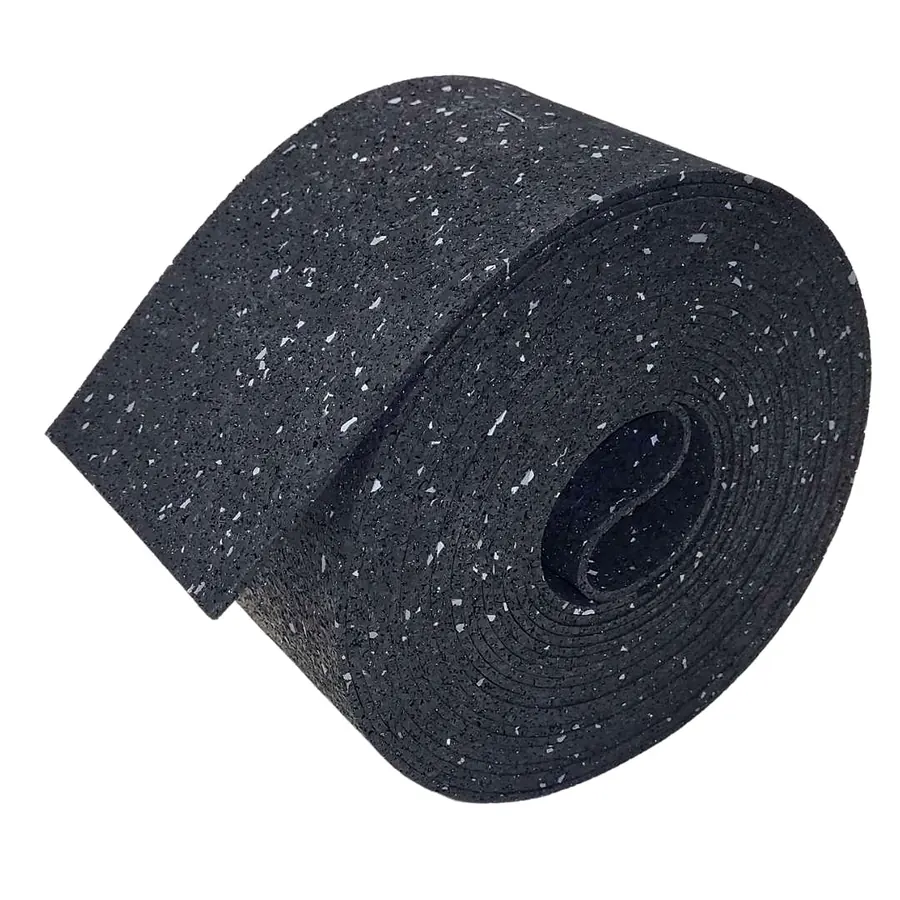
Rolls, strips, and mats made of recycled rubber, designed to increase friction between the load and the loading surface. The appropriate solution should be selected based on the type of cargo, contact points, the area to be covered, the weight of the load, the condition of the loading surface, and the overall load securing system.
Roll, Strip, and Mat
Continuous coverage, linear placement, or spot application
Greater friction
Support for stabilizing cargo during transport
Mounting System
The carpet, cargo, load bed, and securing devices must be evaluated together
01 / Application
Load stability begins with the contact surface
During transport, acceleration, braking, and changes in direction can generate forces that tend to shift the cargo. The use of anti-slip material increases friction at the points of contact and contributes to the overall system used to keep the load stable.
Friction Where It’s Needed
Contact
The surface must bear the load at its actual points of contact.
Friction
The material and surface conditions affect the system’s behavior
Mounting
The anti-slip feature complements, but does not replace, the overall load assessment
The format must be tailored to how the goods are placed on the loading deck. A roll allows you to cover large areas, a strip concentrates the material along linear support points, while a mat allows for localized application.
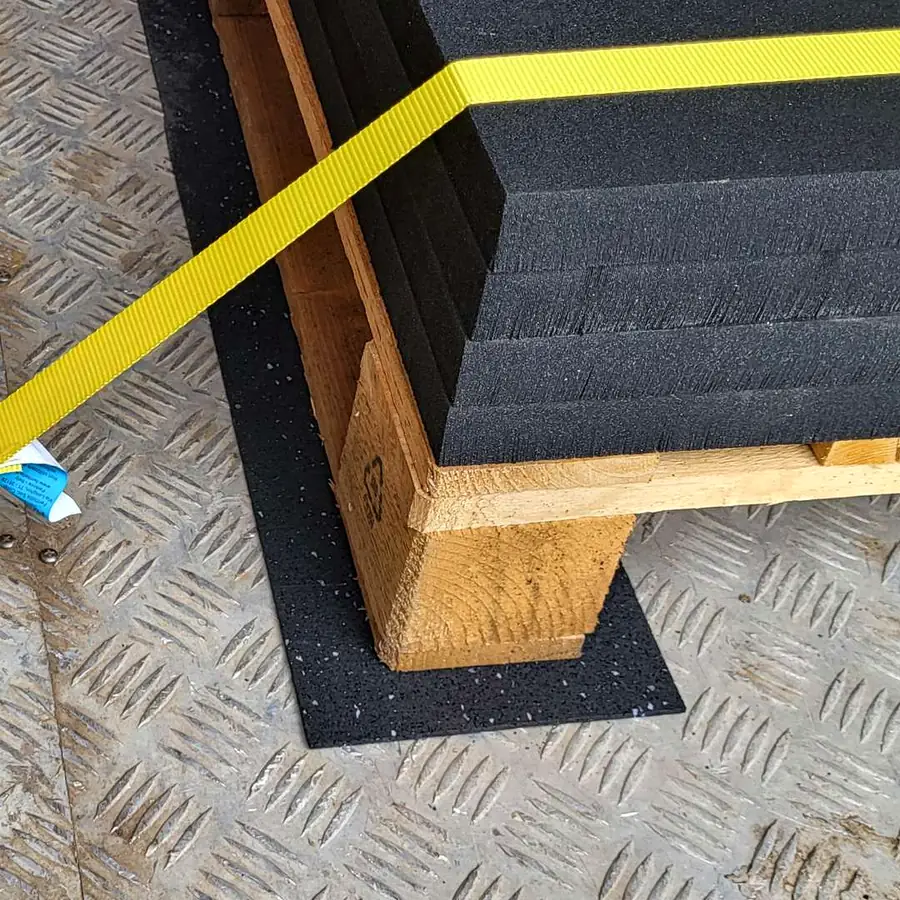
For pallets and skids, it may be sufficient to machine beneath the skid feet or at the contact points. For loads with larger bases, however, a continuous surface may be more practical. Coils, beams, pipes, and industrial components require a specific evaluation of their support geometry.
The condition of the floor is also important: dirt, water, ice, oil, or loose materials can alter the surface’s behavior and must be taken into account before loading.
The anti-slip mat is a component of the safety system: its selection, placement, and fasteners must be appropriate for the actual load.
LOAD
What needs to be transported?
Pallets, crates, machinery, reels, and industrial components are subject to different loads and stresses.
SUPPORT
Where does the contact occur?
A continuous surface, skids, or localized points determine the most efficient configuration.
FLOOR
What is the condition of the surface?
Cleanliness, humidity, temperature, and the material of the floor can affect the available friction.
02 / Usage Contexts
Where to Use Anti-Slip Mats and Anti-Slip Strips
Load stabilisation is a concern for carriers, logistics operators, manufacturers, and distributors. The size and placement of the anti-slip mat vary depending on the vehicle, the load, and the loading procedures.
In road transport, anti-slip mats can be placed between the truck bed and the cargo or between stacked items, helping to increase friction at the points of contact.
The same logic can be applied to various logistics and intermodal configurations, always taking into account operating conditions, surface materials, and the intended fastening system.
The correct configuration must be determined based on the cargo and the safety procedures applicable to the specific shipment.
ROAD TRANSPORT
Trucks and Trailers
Solutions for increasing friction between the load, the pallet, the supports, and the vehicle floor.
LOGISTICS
Pallets and Crates
Strips and mats allow the material to be concentrated beneath the actual support points.
INDUSTRY
Machinery and Technical Loads
Custom-made mats can be designed for the support points of beams, pipes, coils, and other components.
INTERMODAL
Transportation and Supply Chains
Solutions can also be evaluated in multimodal logistics configurations, depending on the cargo and operating conditions.
03 / Solutions
ECO-KARGRIP Anti-Slip Mats for Load Securing
Explore our products for this application. The product sheets allow you to compare the format, dimensions, thicknesses, composition, anti-slip properties, and usage instructions for each solution.
ECO-COIL TRAP
A stabilizing base made of recycled rubber for steel coils, metal reels, and paper rolls, featuring a central recess on both sides to prevent lateral movement during transport.
Discover the product
ECO-KARGRIP MAT
Anti-slip mat made of recycled rubber, custom-cut to increase friction at contact points beneath pallets, crates, machinery, and industrial components.
Discover the product
ECO-KARGRIP ROLL
Non-slip roll made of recycled rubber for load beds and large loading surfaces, designed to increase friction between the cargo and the surface and to support securing systems.
Discover the product
ECO-KARGRIP STRIP
Anti-slip strips made of recycled rubber, cut to size to increase friction at linear contact points beneath pallets, crates, beams, machinery, and other load items.
Discover the product
04 / Selection and Use
How to Choose the Most Suitable Non-Slip Material
The choice between a roll, a strip, or a mat should be based on the load’s geometry and the extent of the contact points. Using material only where necessary can speed up operations and optimize consumption.
Thickness, dimensions, and quantity must then be evaluated in relation to the loads, frequency of use, and expected operating conditions.
Coefficient of friction, test conditions, and regulatory references must be verified in the up-to-date documentation for each specific reference.
ROLL
Coverage of Large Areas
Rolls are recommended when you need to quickly create a large, continuous nonslip surface.
STRIP
Linear supports and pallets
The anti-slip strips allow the anti-slip material to be concentrated under skids, beams, and other linear support points.
MAT
Localized intervention
The mats allow you to increase friction only in specific areas and can be sized to fit the surface.
VERIFICATION
Check surfaces and documents
The deck, load, environmental conditions, technical specifications, and securing procedures must all be verified together.
05 / Materials
Recycled rubber for a durable, slip-resistant surface
The main ECO-KARGRIP products are made primarily from recycled rubber granules derived from end-of-life tires, which are processed into rolls, strips, and mats for use in load securing operations.
The material’s structure makes it possible to create resilient, tear-resistant products suitable for repeated use, available in various sizes and thicknesses depending on the product model.
ROLL, STRIP, and MAT may also feature a dotted surface created using EPDM granules. However, composition, thicknesses, dimensions, and performance characteristics must be specified for the particular product version.
Whether the carpet can be reused depends on its actual condition: before each new use, it is advisable to check that the surface shows no damage, contamination, or conditions incompatible with the intended installation method.
06 / Frequently Asked Questions
Questions About Anti-Slip Mats for Cargo Areas
The key factors to consider when comparing rolls, strips, and mats designed to secure cargo during transport.
What is the difference between ROLL, STRIP, and MAT?
ROLL is designed to cover large, continuous surfaces; STRIP is used along linear surfaces, such as the feet of a pallet; MAT is suitable for localized contact points and can be manufactured in various sizes.
Does the anti-slip mat replace straps and other fastening systems?
The anti-slip material must be considered part of the overall load stabilisation system. The number and type of other necessary devices depend on the cargo, the vehicle, and the transport configuration.
What is the coefficient of friction for these products?
The value depends on the reference and the test conditions. The product data sheets provide the available data: for proper sizing, you must use the value that corresponds to the specific product and configuration you intend to use.
Can the mats be reused?
The products in this line are also designed for repeated use. Before reuse, however, it is necessary to check the surface condition, wear, tears, and the presence of contaminants that could affect friction.
Can they be used in humid conditions or at low temperatures?
The products are designed for variable operating conditions, but water, ice, and debris on the floor can affect the coefficient of friction. The actual surface conditions must therefore be checked before use.
What information is needed to request a service?
It is helpful to specify the type of load, approximate weight, surface area and geometry of the support points, mode of transport, desired size, thickness, quantity, and expected frequency of use.
From the load to the correct format
Do you need to secure cargo during transport?
Please provide details on the type of cargo, loading points, dimensions, and operating conditions. This information will help us determine the appropriate ECO-KARGRIP model and the specific features to consider for your order.
Before making contact, prepare the following:
- type and approximate weight of the load;
- dimensions and geometry of the support points;
- mode and means of transportation;
- material and conditions of the loading deck;
- any size or thickness that may have already been determined;
- Expected quantity and frequency of use.