
Application / Infrastructure and Noise Control
Noise barriers made of recycled rubber for roads and urban areas
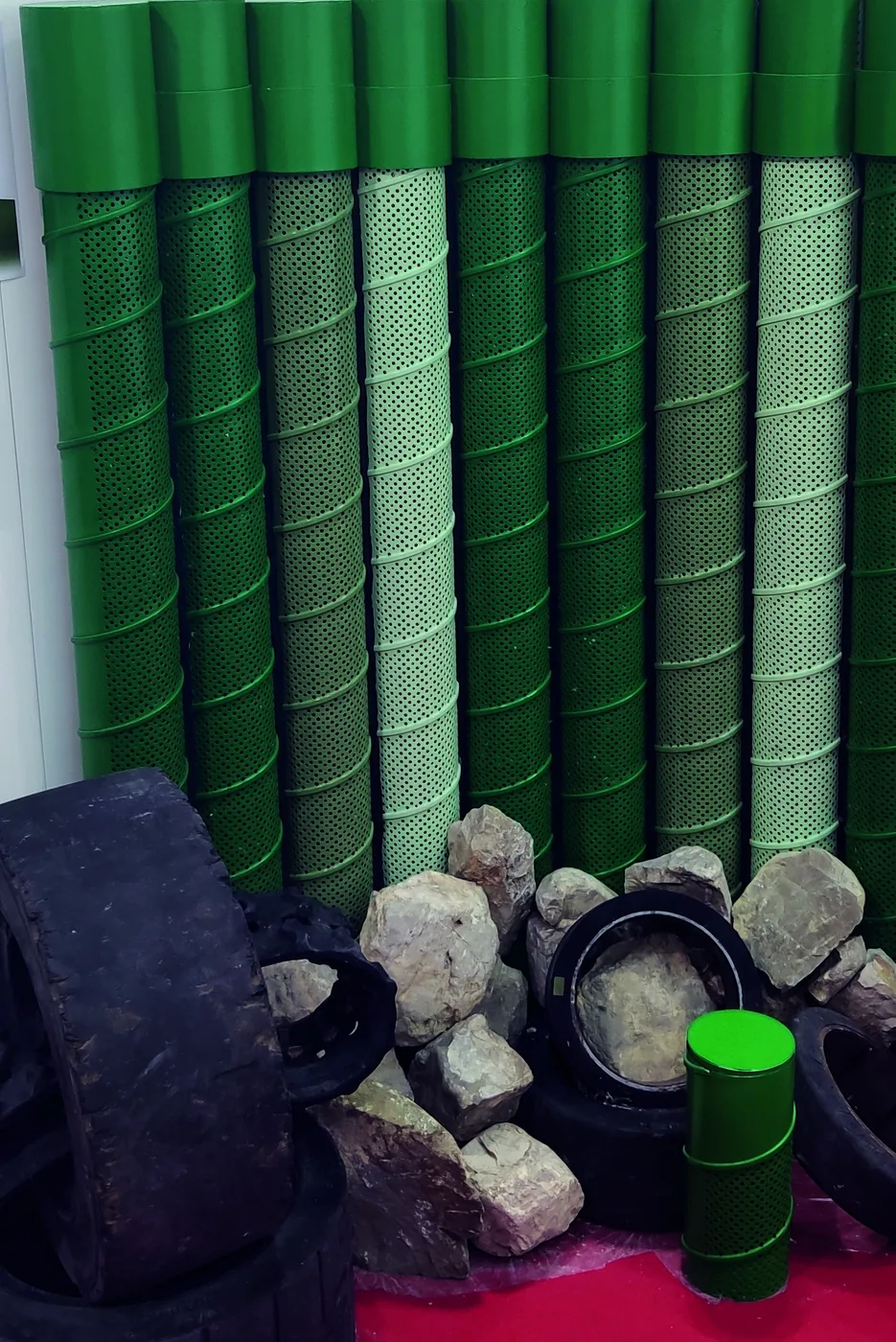
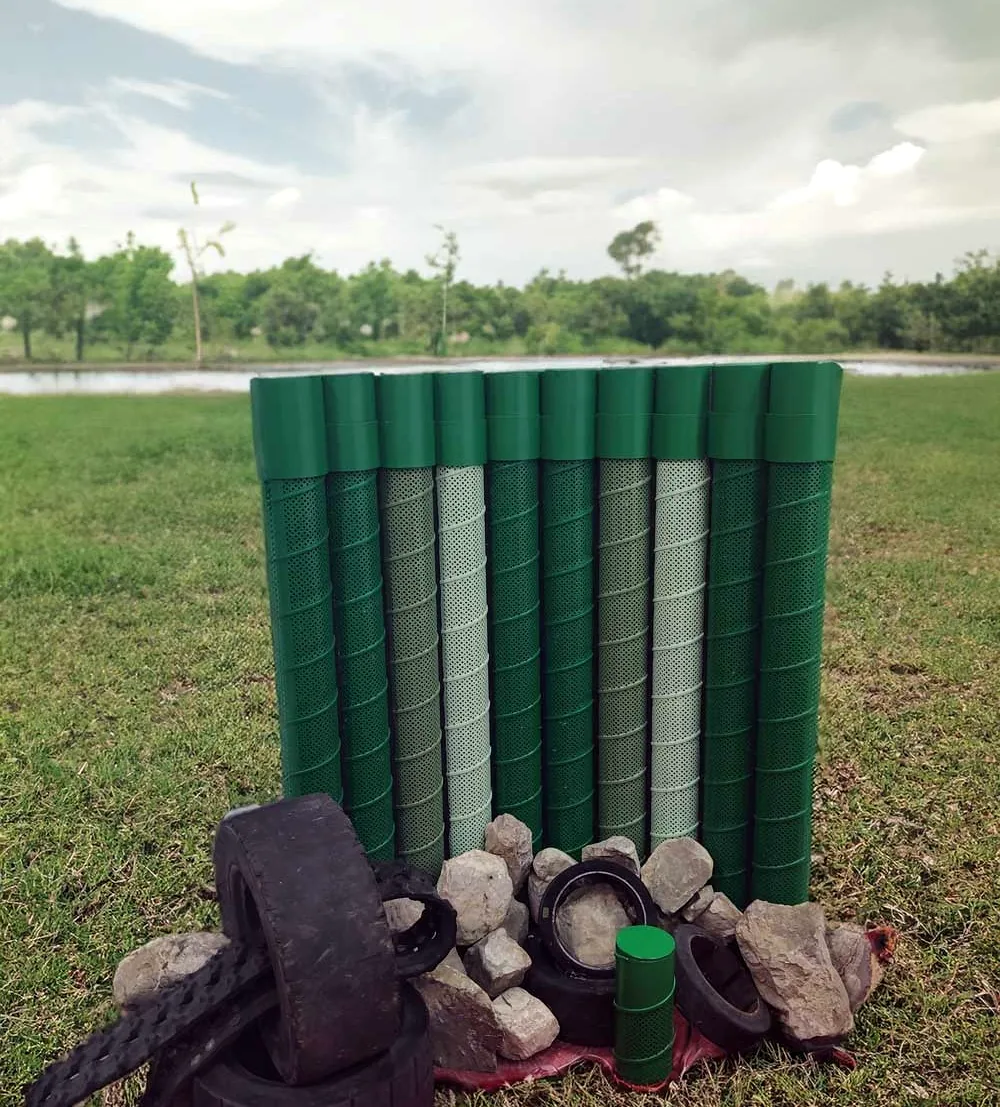
Modular systems for reducing noise generated by traffic and other infrastructure sources. ECO-QUIET TUBE combines a steel structure with an acoustic core made of rubber granules derived from end-of-life tyres, with horizontal or vertical installation configurations that can be adapted to the project’s requirements.
A2
Declared sound absorption class for ECO-QUIET TUBE
DLR 26 dB
Declared sound insulation index based on the reference test
2 configurations
Installing the modules horizontally or vertically
01 / Application
The sound barrier is based on an analysis of the sound source and its context
A noise barrier is not chosen based solely on the material. The location of the noise source, height, distance from the receivers, infrastructure geometry, structural characteristics, and acoustic objectives must all be taken into account in the same design.
Design, Structure, and Performance
Source
Traffic, activity, and the location of the source determine the design of the project
Geometry
The height, continuity, and position of the barrier affect the overall result
Structure
Uprights, foundations, and the orientation of the modules must be coordinated
ECO-QUIET TUBE is a modular system designed to reduce the impact of traffic noise in sensitive areas by combining sound absorption and sound insulation properties.
The horizontal configuration allows the modules to be mounted on vertical posts and can also be considered when replacing existing panels, provided that the existing IPE structures are compatible with the new design.
The vertical configuration, on the other hand, offers a different architectural design, with a more dynamic surface profile. The choice between the two configurations must take into account structural, acoustic, and aesthetic requirements.
The panel’s certified performance specifications are product data; the sizing, support structure, and results of the installation must be verified based on the actual project.
NOISE
What is the source that needs to be shielded?
Traffic, infrastructure, or nearby activities require an accurate assessment of the noise problem.
RECEPTOR
Which areas need to be protected?
Homes, schools, hospitals, green spaces, and other sensitive areas may warrant different objectives.
STRUCTURE
New installation or retrofit?
The presence of existing columns or infrastructure affects the configuration, installation, and structural inspections.
02 / Usage Contexts
Where to Use a Modular Noise Barrier
ECO-QUIET TUBE was developed primarily for noise abatement related to road infrastructure and can be incorporated into projects where it is necessary to reduce noise exposure in urban areas and sensitive locations.
Along roads and highways, the barrier can help mitigate traffic noise by serving as a noise-reduction device within the infrastructure.
In areas near residential neighborhoods, schools, hospitals, and green spaces, the design must take into account the alignment of the barrier in relation to the location of the facilities to be protected.
The height, length, and position of the barrier cannot be determined solely based on the product specifications; they depend on the acoustic and structural analysis of the project.
ROADS
High-Traffic Roads
Noise barriers to be installed along infrastructure with significant vehicular traffic.
HIGHWAYS
Road Infrastructure
Modular configurations for new installations or for the retrofitting of existing noise barriers.
URBAN
Urban and Residential Areas
Noise protection near buildings and neighborhoods exposed to traffic noise.
SENSITIVE
Schools, hospitals, and green spaces
Contexts in which reducing noise exposure may be particularly important in the design process.
03 / Solution
ECO-QUIET TUBE Noise Barrier
See the product sheet for the “Noise Barriers” application to learn more about configurations, materials, installation, acoustic performance, certifications, and the latest technical documentation.
ECO-QUIET TUBE
Modular noise barrier for roads and infrastructure, designed to mitigate the impact of traffic noise in sensitive areas.
Discover the product
04 / Design
How to Set Up a Project with Noise Barriers
The panel’s acoustic performance is just one aspect of the project. It is necessary to define the sound source, the receivers, the barrier’s location, height, length, support structure, and the environmental conditions of the project.
In the case of the retrofitting of an existing infrastructure, it is also necessary to assess the characteristics of the existing columns and foundations before considering the reuse of the structure.
Certified acoustic performance, structural analyses, and structural design must be kept separate yet coordinated in the final design.
ACOUSTICS
Define the mitigation target
Springs, measured water levels, and receiving bodies determine the geometry and characteristics of the project.
LAYOUT
Set height and width
The route, continuity, and position relative to the source must be studied at the actual site.
STRUCTURE
Check the supports and posts
New foundations or existing structures must be verified against the planned configuration.
DOCUMENTS
Verify Tests and Certifications
The selection of the product must be supported by relevant standards, test results, and technical documentation.
05 / Materials
Recycled ELTs and Steel in a Modular Barrier
ECO-QUIET TUBE combines rubber granules derived from end-of-life tyres with a tubular steel structure. The recycled rubber is used in the barrier’s acoustic core, while the metal components form the external modular system.
The use of rubber derived from ELTs makes it possible to repurpose secondary raw material in a new infrastructure application, transforming it into a functional component of noise barriers.
The steel pipes used in the barrier also contain a percentage of recycled steel. The system’s design also makes it possible to separate the various materials at the end of their useful life and send them for recycling.
Composition, acoustic performance, surface finishes, and environmental requirements must be based on the most current ECO-QUIET TUBE documentation and the actual intended configuration.
06 / Frequently Asked Questions
Questions About Noise Barriers
The key factors to consider when evaluating ECO-QUIET TUBE for a new project or for the retrofitting of an existing noise barrier.
Where can ECO-QUIET TUBE be used?
The barrier was developed for applications related to traffic noise and is suitable for roads, highways, and urban areas. It can be considered for protecting residential neighborhoods, schools, hospitals, and green spaces exposed to traffic noise.
What acoustic performance specifications are stated?
ECO-QUIET TUBE has a sound absorption coefficient DLα,NDR of 4 dB with an A2 classification according to UNI EN 1793-1:2017 and a sound insulation index DLR of 26 dB according to UNI EN 1793-2:2018. These data should be reviewed in conjunction with the most recent test documentation.
Can the gate be installed horizontally or vertically?
Yes. ECO-QUIET TUBE is designed for both configurations. The horizontal installation uses modules mounted on vertical posts, while the vertical installation allows for a different layout, including from an aesthetic standpoint.
Is it possible to use existing IPE studs?
The horizontal configuration has also been designed so that it can be evaluated when replacing existing panels installed on IPE structures. However, the compatibility of the uprights and the entire existing structure must be technically verified on a case-by-case basis.
What are the applicable standards for ECO-QUIET TUBE?
The declared test results refer to UNI EN 14388 and the UNI EN 1793 series of standards for road traffic noise reduction devices, as well as UNI EN ISO 354 for the measurement of sound absorption. The most recent product documentation remains the definitive reference.
What information is needed to evaluate a project?
It is helpful to provide the location of the project, the type of infrastructure, the approximate length and height of the barrier, any acoustic surveys or studies, the presence of existing posts or structures, site plans, geometric constraints, and any aesthetic or documentation requirements.
From the spring to the dam
Are you designing a noise barrier?
Please provide details on the infrastructure, the scope of the project, and any available acoustic documentation. This information will allow us to examine the configuration, installation, and technical documentation of ECO-QUIET TUBE in greater detail.
Before making contact, prepare the following:
- location and type of infrastructure;
- approximate length and height of the barrier;
- floor plans, cross-sections, or other available drawings;
- any acoustic study or survey;
- presence of existing studs or structures;
- aesthetic, color, or documentation requirements.