
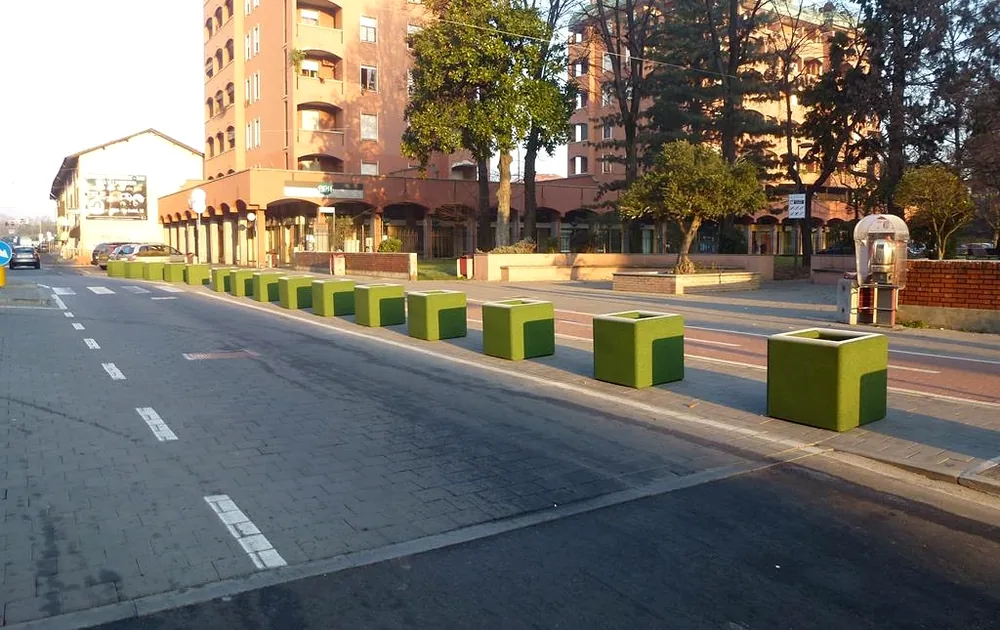
Application / Public and Community Spaces
Street furniture made from recycled rubber for public and community spaces
Seats, benches, planters, and boundary elements made from recycled rubber for organizing plazas, parks, pedestrian areas, courtyards, and other shared spaces. The solution should be chosen based on the intended use, available space, subgrade, and installation conditions.
Furniture and Home Decor
Seats, benches, planters, and boundary elements
Open Spaces
Parks, squares, courtyards, paths, and common areas
Design and Installation
Function, Dimensions, Substrate, Stability, and Maintenance
01 / Application
Space comes before the object
Designing street furniture means understanding how a place is traversed, used, and experienced. Only then can one select the elements capable of transforming that space into a more intuitive, accessible, and organized environment.
Urban Space as a System

Urban Staircase
Squares, parks, paths, and public spaces have different proportions and dynamics
Function
Sitting, lingering, incorporating greenery, guiding, or defining spaces all require different elements
Reports
People, access points, flooring, and furnishings must function as a single system
A bench is not just a seat, and a planter is not just a container. Position, distance, orientation, and the relationship to the pathways determine the role that each element plays within the space.
For this reason, the selection of elements must take into account available dimensions, pedestrian traffic patterns, floor space, exposure, accessibility, and future management.
Our street furniture products are made from recycled rubber and can meet a variety of design requirements. Dimensions, weight, colors, installation methods, and documentation should be checked in the product specifications for each individual item.
First, you define the function of the space. Then, you identify the product that best fits that function.
USE
What’s supposed to happen here?
A place to stop, a passageway, a gathering spot, a way to incorporate greenery, or a way to define a space.
PEOPLE
Who will use the space?
Traffic flows, dwell time, accessibility, and intensity of use influence the layout.
CONTEXT
How does it interact with its context?
Architecture, paving, landscaping, access points, and street furniture must be considered as a whole.
02 / Usage Contexts
Where to Use Street Furniture
The same type of element can serve different functions depending on the space. The design must therefore be based on the intended use and the way in which people, pathways, and gathering areas interact with one another.
A bench can serve as a resting spot along a path, while a planter can incorporate greenery and help organize the space at the same time.
The design should be evaluated by considering the expected duration of use, pedestrian traffic, access points, and how it relates to existing paving and other elements.
The contexts listed are for guidance only: technical compatibility must be verified for the specific product.
SQUARES
Squares and Pedestrian Areas
Seating, benches, planters, and boundary elements to organize areas for passing through and lingering.
GREEN
Parks and Green Spaces
Elements for creating resting spots, incorporating vegetation, and guiding paths through green spaces.
COMMUNITY
Schools, schoolyards, and common areas
Solutions for creating functional zones and gathering areas in communal spaces.
FLOWS
Trails, Entrances, and Rest Areas
Elements intended for parking or for separating pedestrian areas, entrances, and other functional zones.
03 / Solutions
Street furniture made from recycled rubber
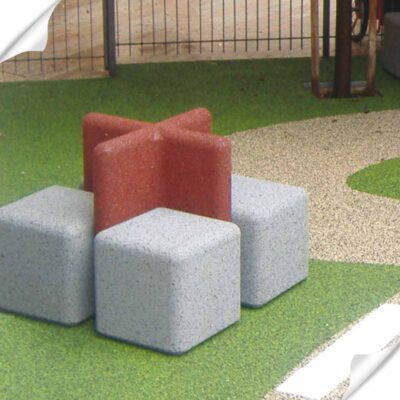
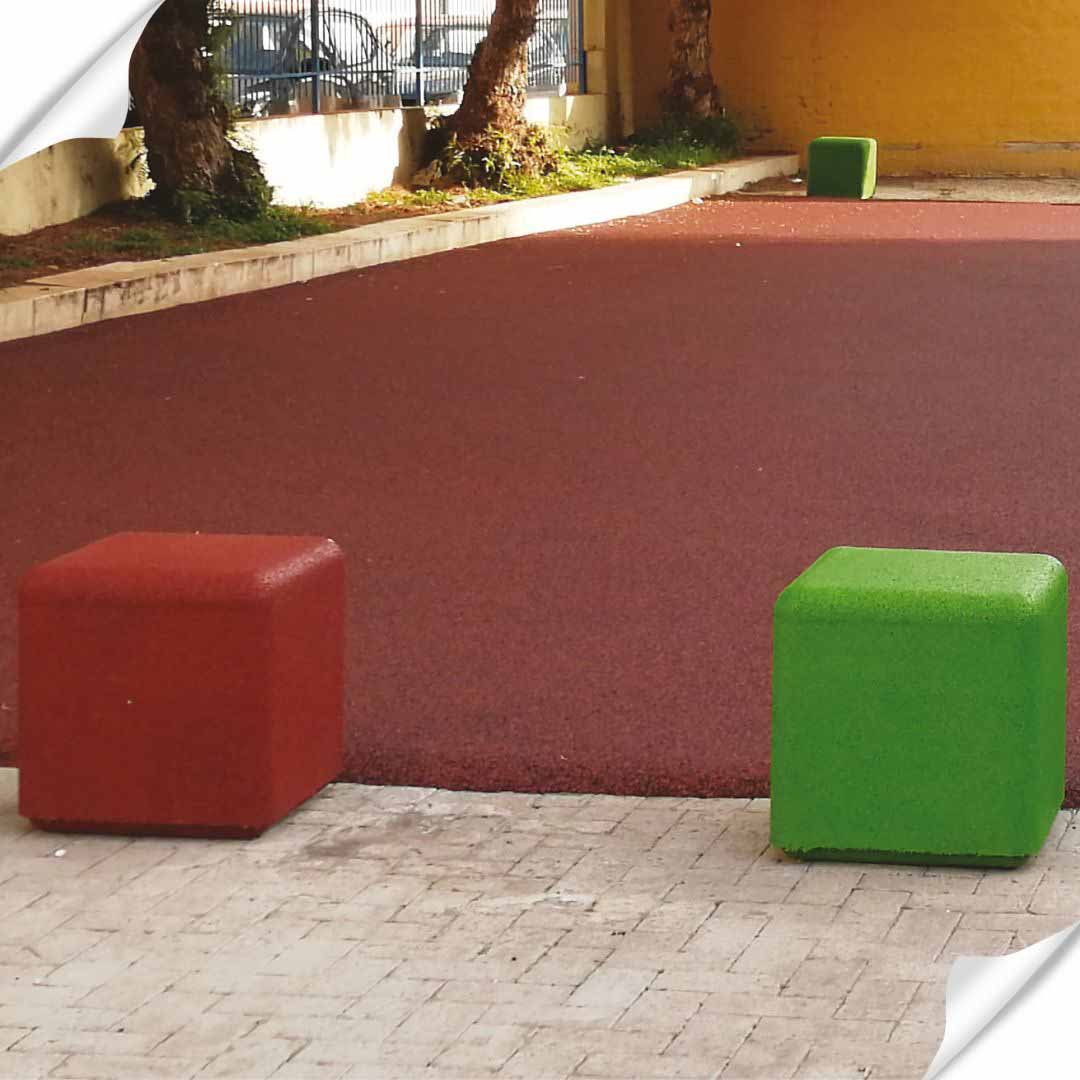
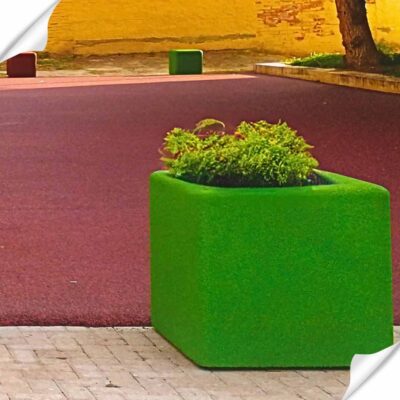
Explore our products for this application. Each product sheet lists specifications, dimensions, finishes, and helpful information to help you choose the solution that best fits your project.
04 / Design
How to Choose and Arrange Elements in a Space
Seats, benches, planters, and boundary elements serve different functions. The choice should be based on the intended use, pedestrian traffic patterns, and the actual space available.
The shape, weight, finish, and installation method must then be evaluated in relation to the substrate, exposure, and anticipated long-term maintenance.
The technical specifications and instructions provided in the individual product data sheet always take precedence over the general guidelines on the application page.
FUNCTION
Function and Context
Determine whether a seating area, a rest area, the incorporation of greenery, or the separation of areas and pathways is needed.
INSTALLATION
Surface and Stability
Evaluate the mounting surface, flatness, slopes, potential interference, and the intended mounting method for the product.
SPACE
Dimensions and Accessibility
Consider walkways, distances, waiting areas, and the space needed around the elements.
MANAGEMENT
Cleaning and Maintenance
Ensure accessibility for cleaning and inspection, and follow the maintenance instructions for each specific model.
05 / Materials
Recycled Rubber in Street Furniture
The solutions in the ECO-URBAN line transform recycled rubber into elements designed for new uses in public and community spaces.
The product line uses recycled rubber from end-of-life tyres. In the context of street furniture, the material is used to create elements designed for use in outdoor and public spaces.
Composition, percentage of recycled material, finishes, performance, and environmental documentation must be verified in the updated technical data sheet for each specific product.
06 / Frequently Asked Questions
Questions About Street Furniture Made from Recycled Rubber
Useful information on the key factors to consider before choosing furnishings for the space.
Where can street furniture made from recycled rubber be used?
Possible settings include parks, squares, pedestrian areas, courtyards, walkways, and other common areas. Compatibility must be verified with regard to the product, the substrate, and the exposure conditions.
What types of furnishings are available for a public space?
The product line associated with this application may include chairs, benches, planters, and elements used to delineate spaces. The products displayed on this page are automatically retrieved from the catalog.
Is it always necessary to secure the elements to the ground?
No. The installation method depends on the product, its weight, shape, location, and the specific conditions of the space. Please refer to the instructions on the individual product sheet.
Are the products suitable for outdoor use?
The ECO-URBAN line includes solutions designed for outdoor spaces. However, the intended use and permitted conditions must be confirmed for each specific product.
How do you determine which product is best suited for you?
The selection process begins with the required function and continues by evaluating dimensions, footprint, mounting surface, stability, finishes, installation, and long-term maintenance.
What information is needed to evaluate a supply contract?
It is helpful to specify the location and intended use, available sizes, the items and quantities requested, the type of subfloor, installation conditions, desired colors, and any necessary documentation.
From Context to Project
Are you designing a public space or communal space?
Please provide the intended use, available dimensions, required functions, and installation conditions. This information will help us identify the solutions to explore further and the necessary documentation.
Before making contact, prepare the following:
- location and intended use;
- dimensions or floor plan available;
- required functions and quantities;
- type of substrate;
- specified installation conditions;
- colors and required documentation.