
ECO-STABLE

ECO-FARM
Flooring and wall coverings for stables and equestrian facilities.
Recycled Rubber Mats for Equestrian Facilities
Non-draining rubber flooring for stalls and stables
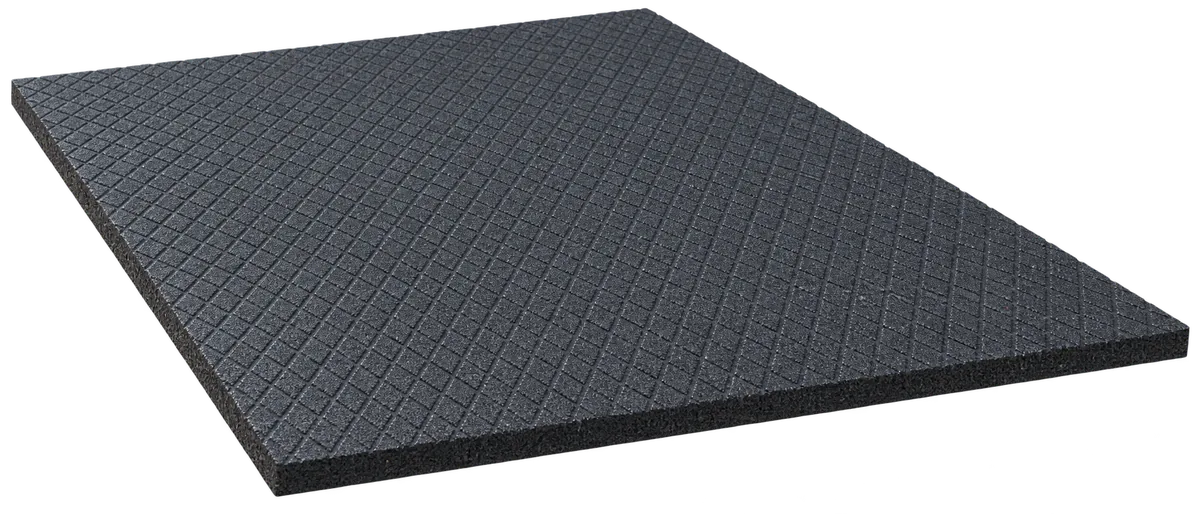
ECO-STABLE is non-draining rubber flooring for horse stalls, horse walkers, and other equestrian facilities. The diamond-patterned surface provides better traction than a smooth surface. In the stall, you can reduce bedding consumption throughout the year: a light dusting on top of the tiles is sufficient, to be adjusted according to your stall management routine.
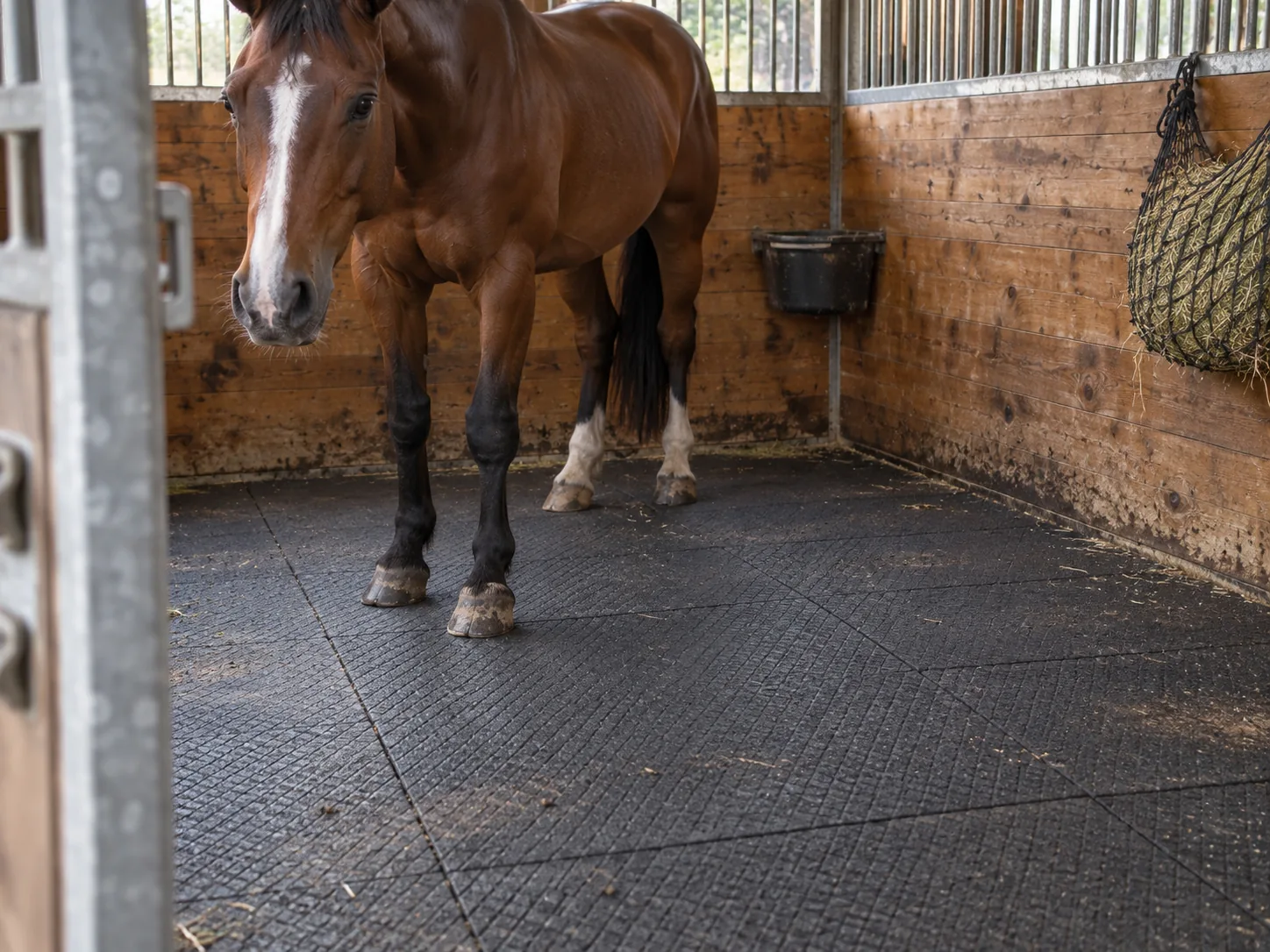
Non-draining plate
Liquids are managed on the surface based on the characteristics of the area.
Surface-mounted installation
Cut the panels with a utility knife and place them side by side on the prepared surface.
20 mm thick
Standard size of 1 m² and two longer sizes available upon request.
01 / Product
How Does a Non-Draining Plate Behave?
The compact design of ECO-STABLE keeps liquids on the surface of the slab. Rubber provides a less rigid surface than concrete or compacted soil.
In the pits
Close-fitting joints and bedding
A close fit keeps gaps small. Liquids can still pass through unsealed joints.
Sprinkle a light layer of bedding over the panels. Using less bedding each time you refresh it can reduce your annual consumption. Adjust the amount based on how you manage the stall.
02 / Installation video
How to Install ECO-STABLE Plates
03 / Gallery
ECO-STABLE in action and up close
Two applications and a close-up photo of the finish. Click on the images to see the surface and edge of the plate.
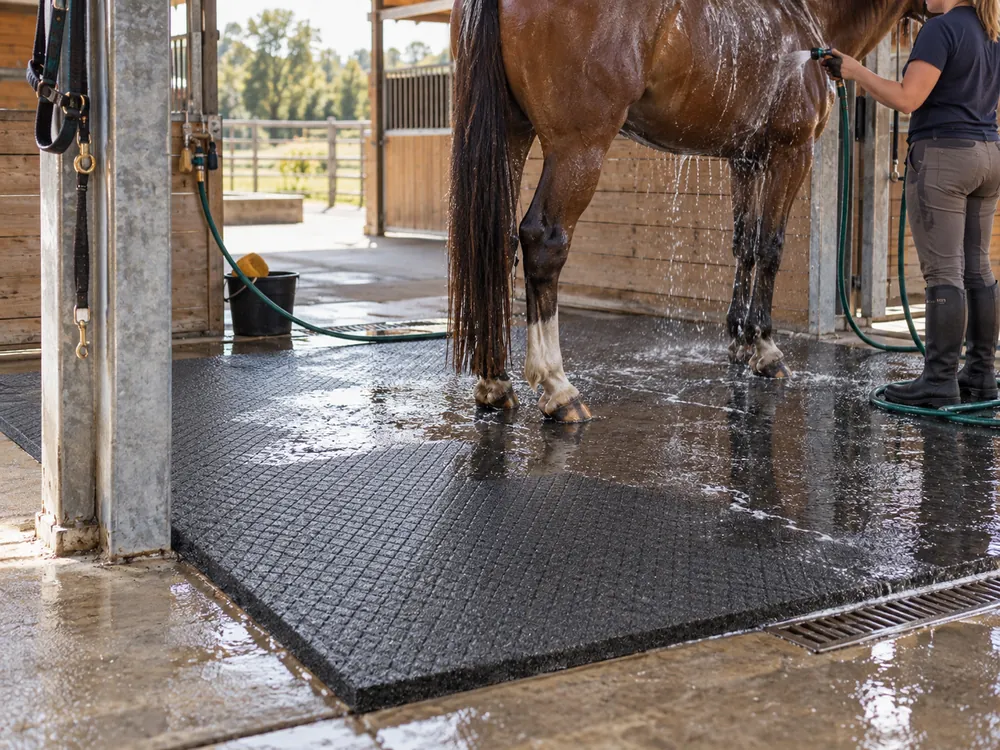
Washing Area
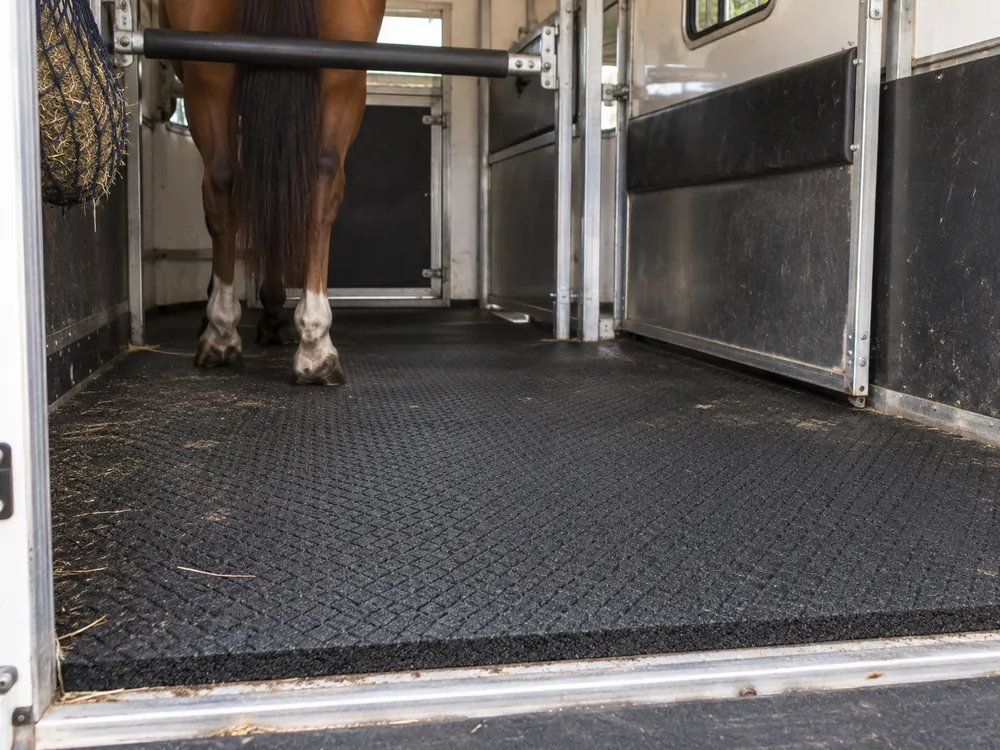
Horse Trailers
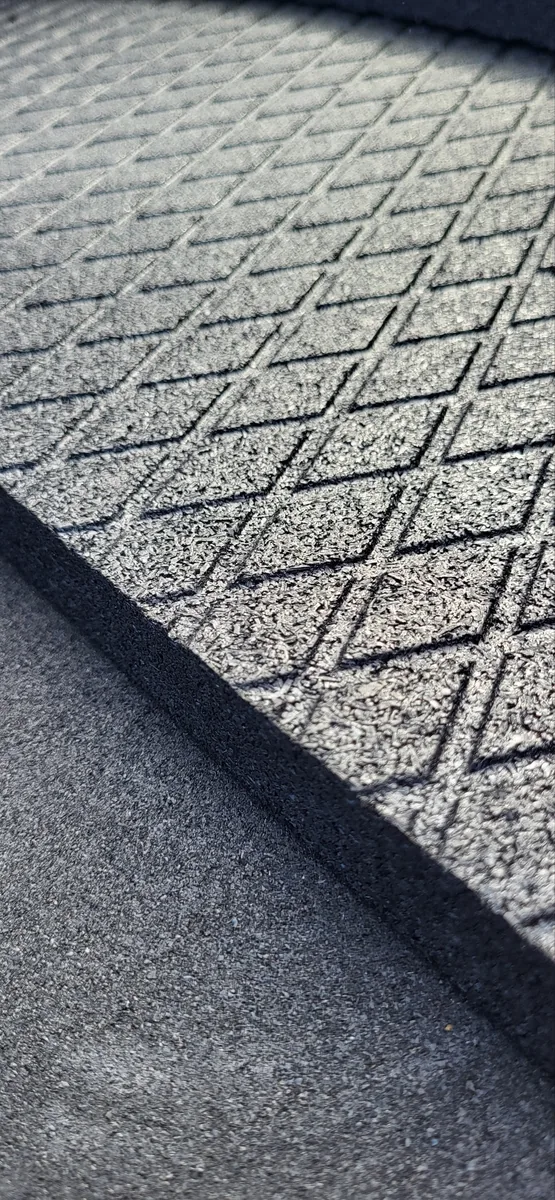
Diamond-patterned border and surface
04 / Applications
Where to Use ECO-STABLE
Assess the land use, the stability of the ground, and the flow of water in wet areas.
Playpens, rest areas, and merry-go-rounds
For stalls, resting areas, and horse paddocks where a compact slab is needed that does not allow water to drain through its thickness. In stalls, the walls can serve as lateral containment.
Washing and Preparation Areas
Create a slope and provide a suitable drain. The water flows over the surface and should be directed toward the collection point.
Corridors, vans, and trailers
ECO-STABLE can be used in stable aisles, walkways, and horse vans or trailers. Choose the installation method based on the substrate and the perimeter.
05 / Product Information
ECO-STABLE Plate Sizes and Specifications
The thickness is 20 mm for all sizes. The two longest sizes are available upon request.
| Formats | 1000 × 1000 mm 1000 × 2000 mm (made to order) 1000 × 3000 mm (made to order) |
|---|---|
| Thickness | 20 mm |
| Approximate weight | 22 kg/m² |
| Area | Diamond-pattern embossing |
| Color | Uncolored black |
| Material | Recycled SBR rubber, medium-sized granules |
06 / Materials and Sustainability
Recycled rubber from end-of-life tyres
The plates are made from SBR rubber granules derived primarily from end-of-life tyres, bound with polyurethane resin. The black surface may have light-colored or colored specks typical of recycled rubber. At the end of their useful life, the plates can be sent for recycling through authorized operators.
07 / Installation
How to Prepare the Subfloor and Install the Floor Panels
The subgrade must be stable, level, and sufficiently compact. On natural ground, prepare and stabilize the installation surface. Make sure the slabs are flush and firmly supported.
Surface-mounted installation
Place the slabs on the prepared base and set them side by side. In the boxes, the walls limit lateral movement and help keep the joints close-fitting.
Cut to size
Trim the panels with a utility knife to follow the perimeter of the enclosure and fit them to the dimensions. A precise cut allows the panels to fit together snugly.
Optional edge gluing
To join the tiles into one surface, you can join the edges of the panels using a two-component polyurethane adhesive. If the tiles are laid loose, you can lift them one at a time. If the panels are joined together, removal is more difficult, partly due to their weight of approximately 22 kg/m².
08 / Cleaning and Maintenance
How to Clean and Maintain Hair Straighteners
Routine cleaning of the dog crate involves removing soiled bedding and debris. When washing is necessary, let the surface dry completely and avoid standing water.
Removal of Residues
Use a broom to remove soiled bedding and debris from the stall floor.
Occasional washing
When necessary, wash with water and a mild detergent that is safe for rubber. Let the surface dry.
Products to Avoid
Avoid solvents, strongly acidic or alkaline cleaners, and other harsh products.
09 / Documentation
Documents for Your Project
If the project requires material testing, you can request the REACH declaration or information on tests conducted on standard mixtures.
REACH Declaration
Available upon request for material verification.
Material testing in accordance with EN 71-3
The migration tests for elements refer to standard mixtures.
10 / FAQ
Frequently Asked Questions About ECO-STABLE
How to manage liquids, choose an installation method, and prepare the stall floor.
Is ECO-STABLE flooring waterproof?
The plate body is not self-draining. The joints between adjacent plates, which are not sealed, are not watertight. In washing areas, water is directed toward the drain.
Do I still need bedding with ECO-STABLE?
Yes. Keep a light layer of bedding on top of the plates and adjust the amount based on how you manage the stall. With a thinner layer, you can reduce bedding consumption throughout the year.
Can the plates be cut to size?
Yes, you can trim them with a utility knife to fit them to walls and spaces. See the installation instructions.
Should the plates be glued?
The standard installation method is to simply lay the tiles side by side. If necessary, the edges can be bonded together using a two-component polyurethane adhesive. Joined tiles are more difficult to remove.
How is water managed in the washing areas?
The floor must have an adequate slope toward a drain. Water is directed across the surface.
What is the difference between ECO-STABLE and ECO-BOX?
ECO-STABLE features a non-draining slab body. ECO-BOX is a draining solution with channels at the base that facilitate drainage toward the subgrade.
11 / Contact Us
Information for Your Equestrian Project
Describe the area to be floored and the subfloor. We’ll help you determine the right size and installation method based on the environment and how you handle liquids.